
Most people think about sleep as a health issue. Diet. Screens. Stress. But after 26 years of designing bedrooms and a degree in psychology, I can tell you that the environment you sleep in affects your nervous system more than most people realize.
The design of your bedroom is not a passive backdrop to your sleep. It is an active participant. The choices you’ve made, or haven’t made, in that space are either working for you or against you every single night.
Color sets the stage before you close your eyes
The physiological response to color happens whether we’re aware of it or not. Warm, saturated tones like deep reds and high-contrast patterns increase heart rate and stimulate the nervous system. In a dining room or entertaining space, this is exactly what you want. In a bedroom, it can make it measurably harder to wind down.
The colors that support sleep lower cortisol and slow the heart rate: soft blues, muted greens, warm whites, gentle taupes. Not because they’re boring, but because they’re neurologically calming. You can create a beautiful, sophisticated bedroom in these palettes.

The guest suite at Lakeside Sanctuary is a good example of this in practice. A layered wave wallcovering in dusty blue wraps the room, pulling the lake just outside the window into the space itself. The palette wasn’t chosen because it looked pretty. It was chosen because of what it does to the nervous system of the person sleeping in it.
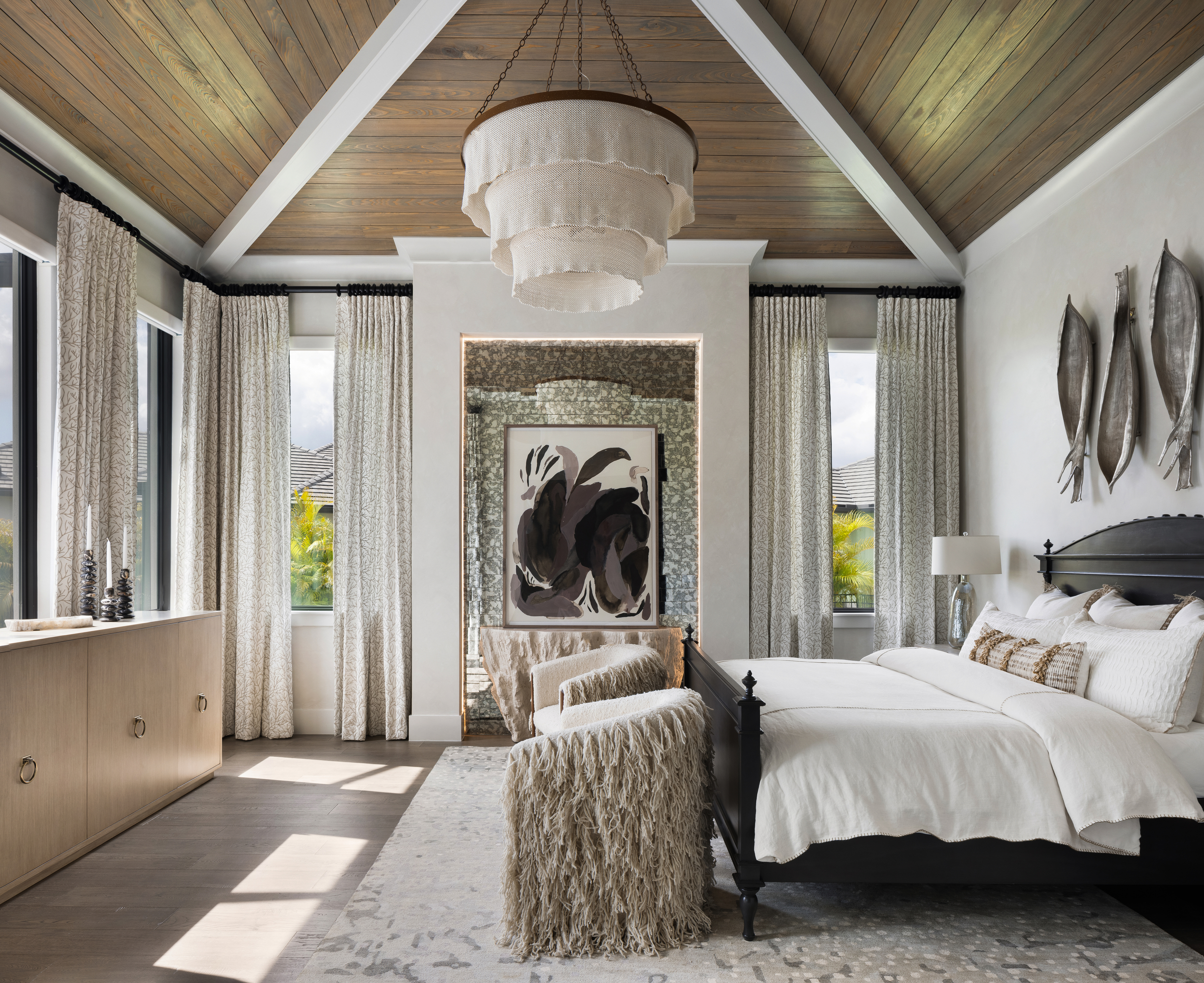
 The primary suite takes a different approach — darker wood tones, sculptural art, layered textures — and still achieves calm. Not through color this time, but through coherence. Every element tells the same story, and that visual unity is neurologically settling in its own way.
Light is the most powerful sleep disruptor in your home
Natural light regulates your circadian rhythm, the internal clock that tells your body when to wake and when to sleep. Window treatment decisions in a bedroom are health decisions as much as aesthetic ones. The ability to fully darken a room when needed, while still welcoming morning light when you want it, is something motorized and layered window treatments handle particularly well. It’s one of the upgrades clients consistently say changed how they sleep.
At Lakeside Sanctuary, the guest suite windows face the lake directly — spectacular during the day and potentially disruptive at night without the right layering. Roman shades paired with floor-length drapery give the room complete control over light at every hour. The primary suite’s vaulted ceiling and tiered chandelier are scaled and dimmable in a way that supports the shift from evening to sleep. These aren’t incidental details. They’re the design.
Artificial light matters too. The warm, dim light of a bedside lamp is neurologically different from overhead lighting. Having multiple layers of lighting in a bedroom and being intentional about which ones you use in the hour before sleep make a measurable difference.
Clutter raises cortisol, even when you’re not looking at it
Research in environmental psychology shows that visual clutter increases cortisol levels even in people who describe themselves as comfortable with mess. The effect doesn’t turn off when you close your eyes.
A bedroom with inadequate storage will always feel slightly stressful to be in, regardless of how beautiful the furniture is. At Lakeside Sanctuary, the primary closet was designed with the same level of intention as every other room in the home — dark millwork, glass-front display cases, organized by category and proportion. A closet that functions well is not a luxury. It’s a neurological contribution to the room it serves.
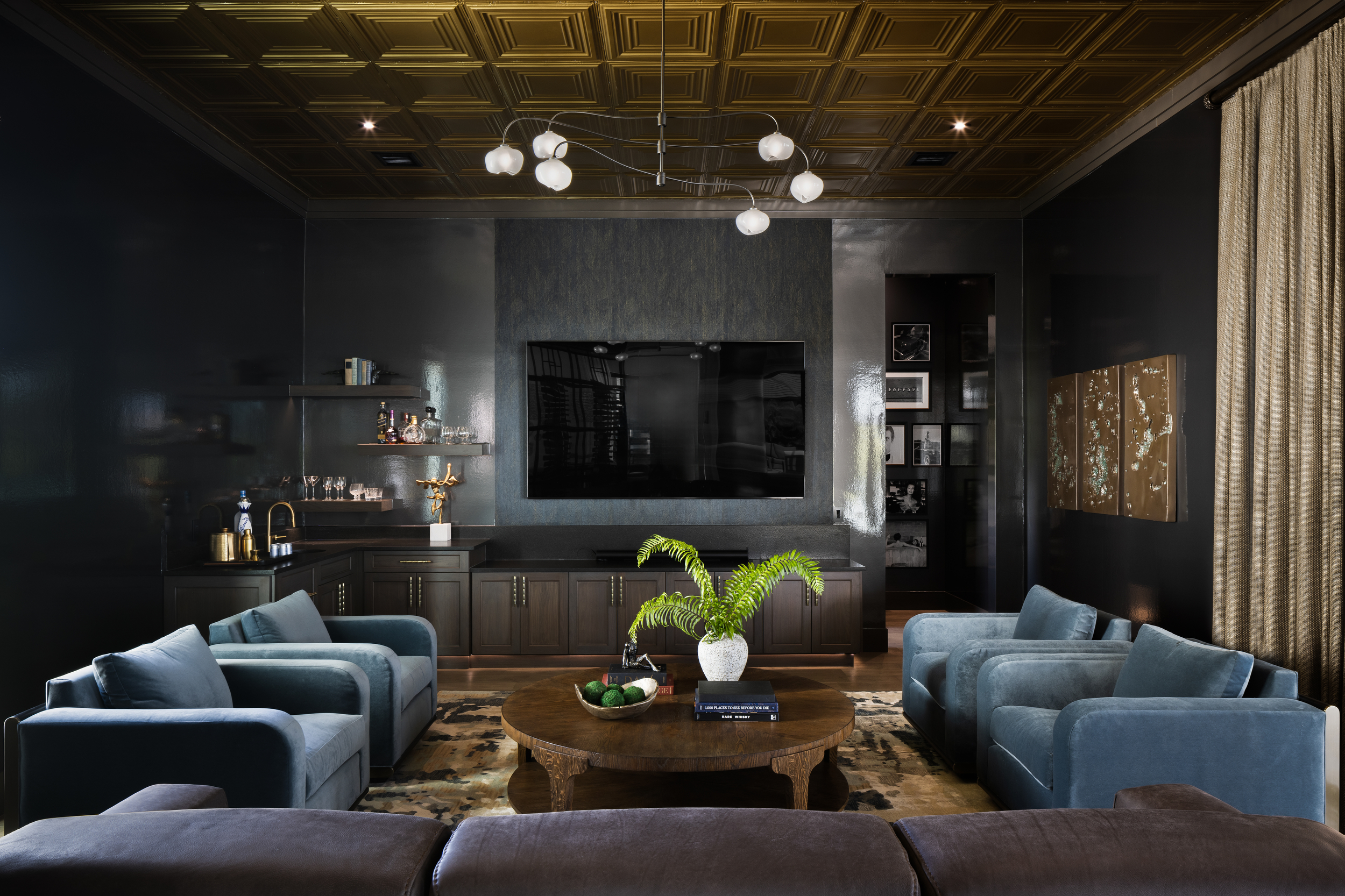
Built-in storage, a well-organized closet, surfaces that are styled rather than stacked: these aren’t just aesthetic choices. They are neurological ones.
Temperature, texture, and the body’s need to feel held
The materials in a bedroom affect sleep in ways that go beyond the visual. Heavy, layered textiles signal to the nervous system that it’s safe to rest. Natural fibers like linen and cotton regulate body temperature better than synthetics. A well-made bed with properly scaled bedding communicates something to the body that a poorly made one simply doesn’t.
Throughout Lakeside Sanctuary, every bedroom was approached with this in mind — from the layered patterned drapery and fur bench in the primary suite to the woven textures and quilted bedding in the guest suite. Texture here is not decoration. It’s intention.