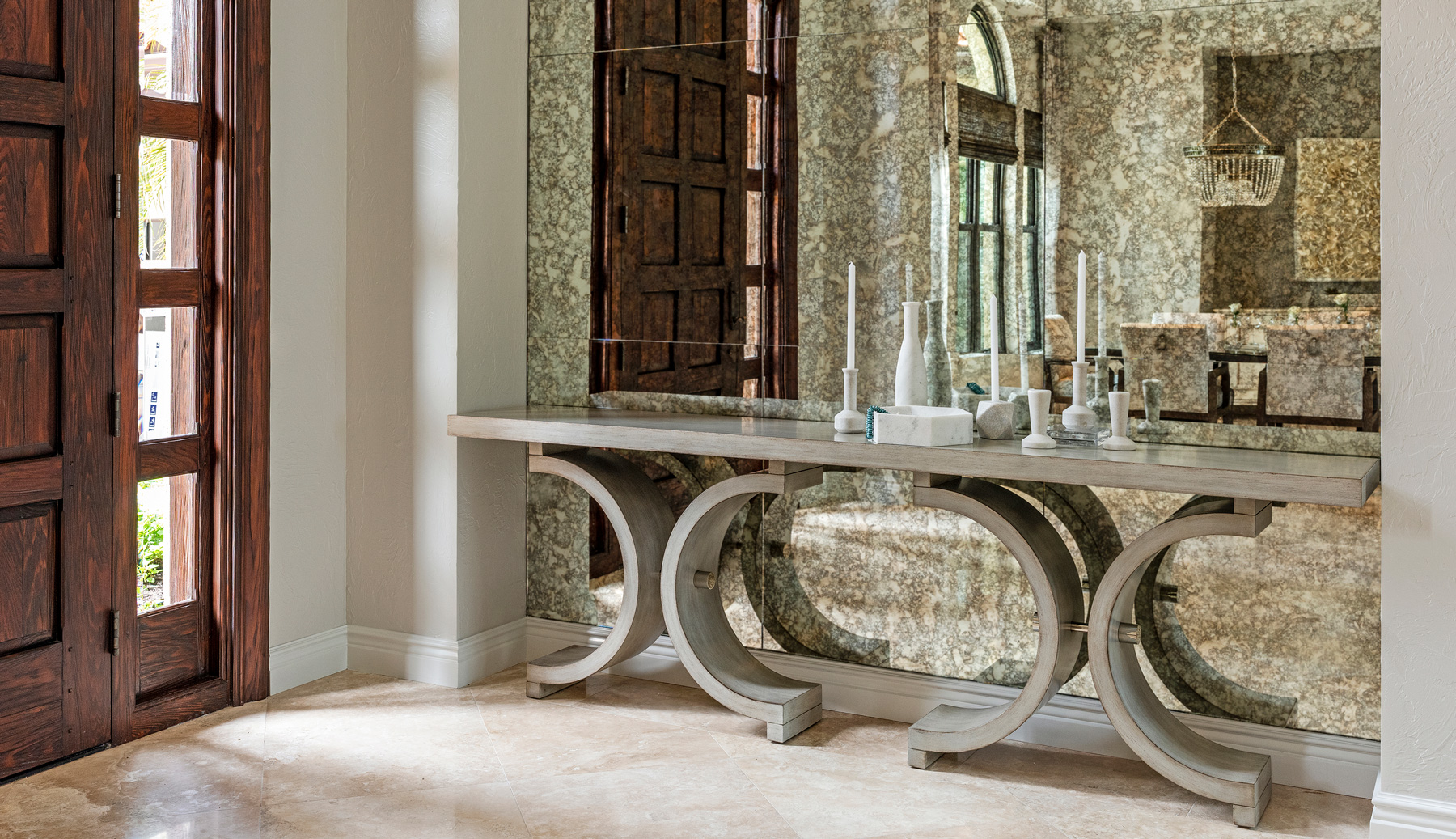
Most people don’t spend a lot of time designing their entry. It’s the space between outside and inside, a pass-through, somewhere you drop your keys and your bag and move on. It doesn’t get the same attention as the kitchen or the primary bedroom. It doesn’t even get the attention of the guest bathroom.
And that’s exactly the problem.
The entry is the first thing every person who walks through your front door experiences. It’s also the last. And unlike the kitchen, which guests might glimpse from across the room, or the bedroom they may never see at all, the entry is a room everyone encounters up close, usually while they’re paying full attention. Those first few seconds leave an impression that colors everything that follows.
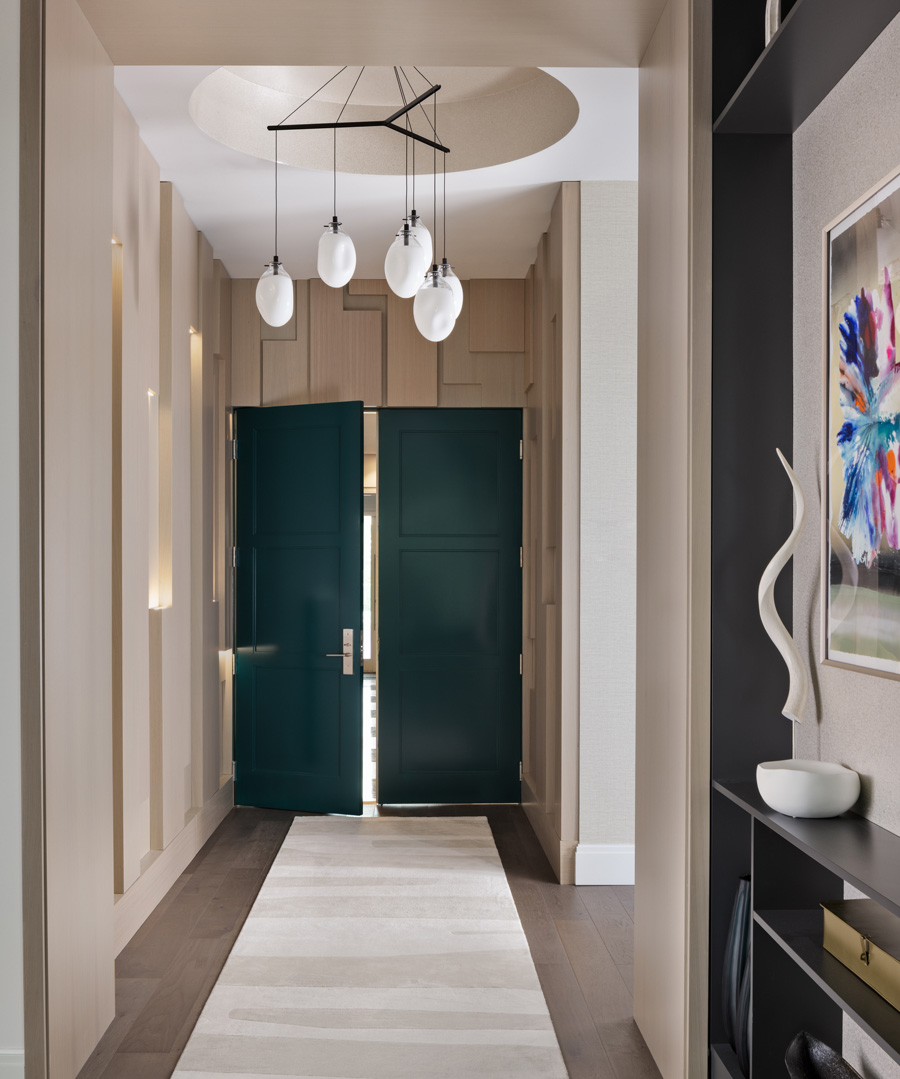
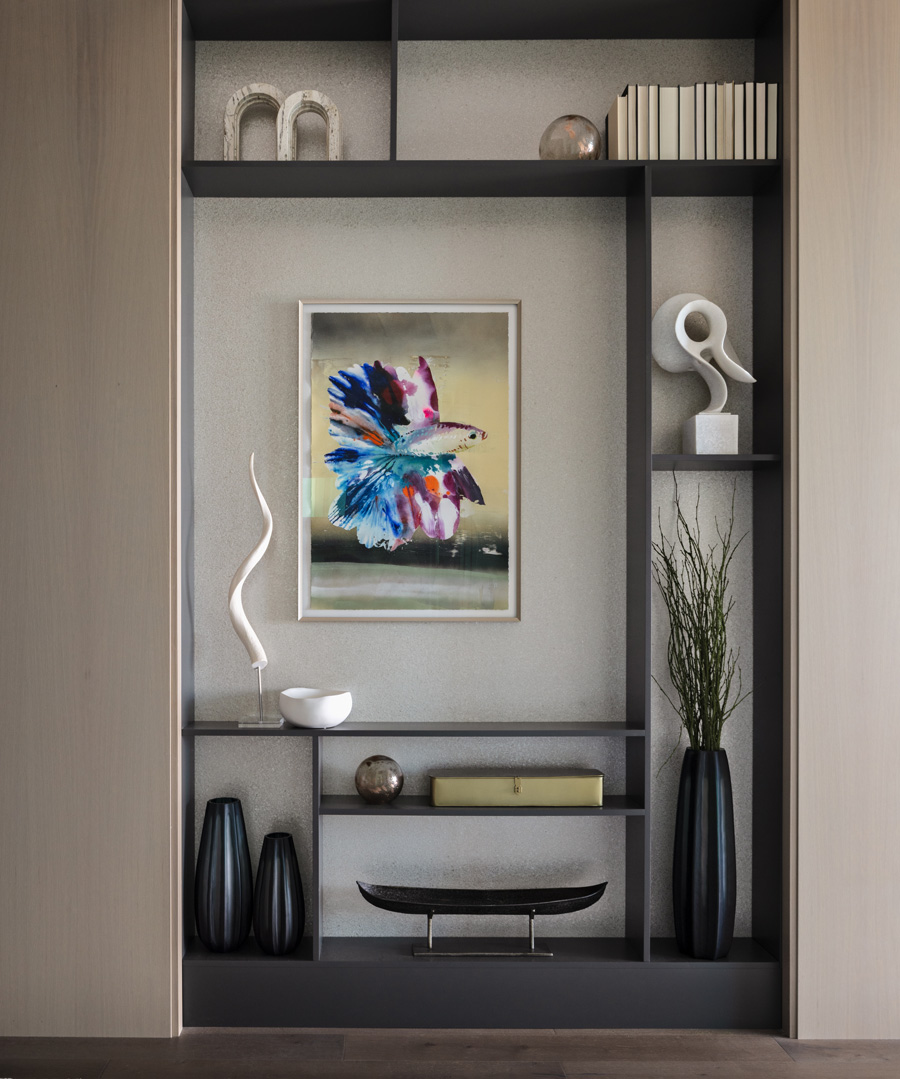
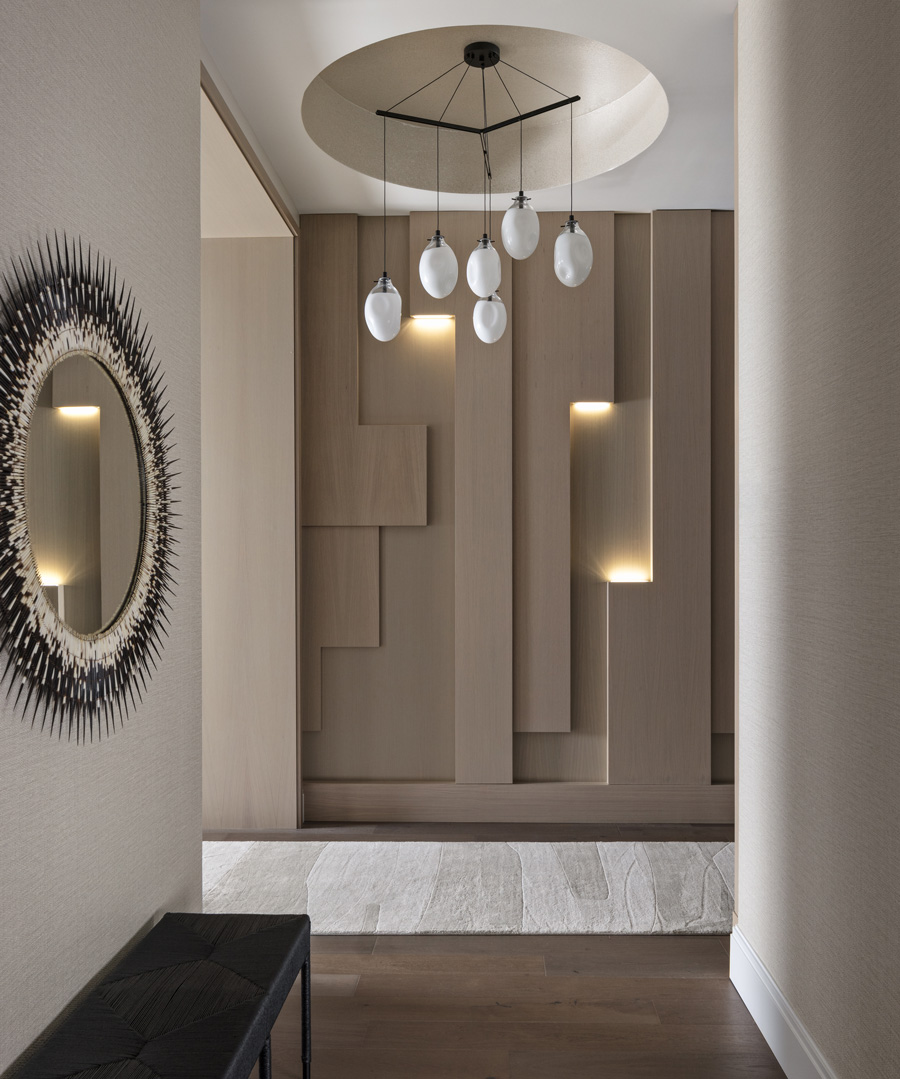
I’ve designed entries in every configuration: a full double-height foyer with floor-to-ceiling marble cladding and a dark round pedestal table that becomes the room’s anchor; a bright, airy hall where a sculptural coral and glass chandelier is the first thing you see when the doors open; a compact pass-through where one bold mirror on a curved plaster console does the work of a whole room. The square footage doesn’t determine how well an entry works. The decisions do.
Light is the entry’s most important variable
If there is one thing I’d change in most homes, it’s the entry lighting. A single overhead fixture on full brightness is the fastest way to flatten a space and make it feel institutional. It doesn’t matter how beautiful the rest of the room is; flat overhead light undermines it.
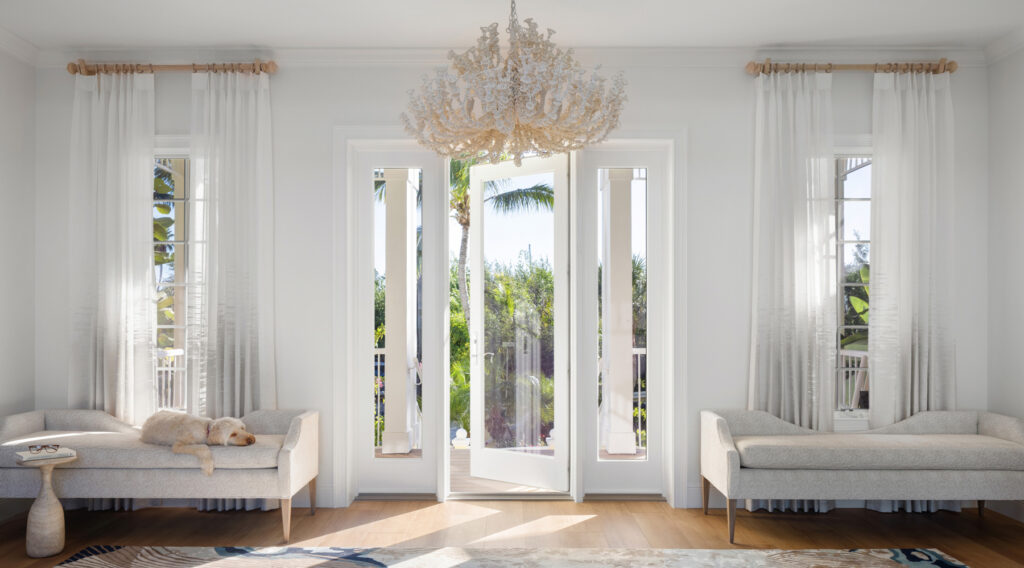
The entries that work have layered light. A chandelier or pendant that has real presence and sits on a dimmer. A sconce beside a piece of art that draws the eye. Natural light from a sidelight or transom window that changes the feeling entirely depending on the time of day. When you open the door to an entry with good light, you feel it before you’ve processed what you’re looking at.
One good thing beats five mediocre things
This is true everywhere in design, but it’s especially true in the entry, because the entry is a small stage. There isn’t room for everything to compete.
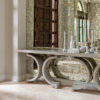
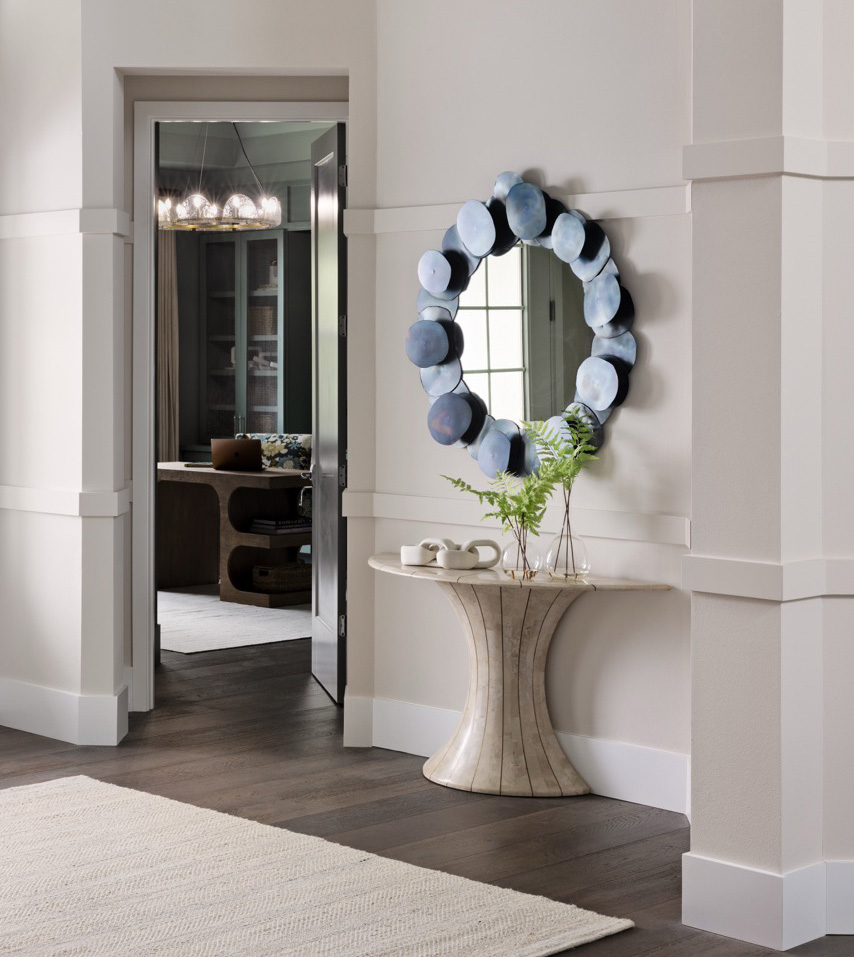
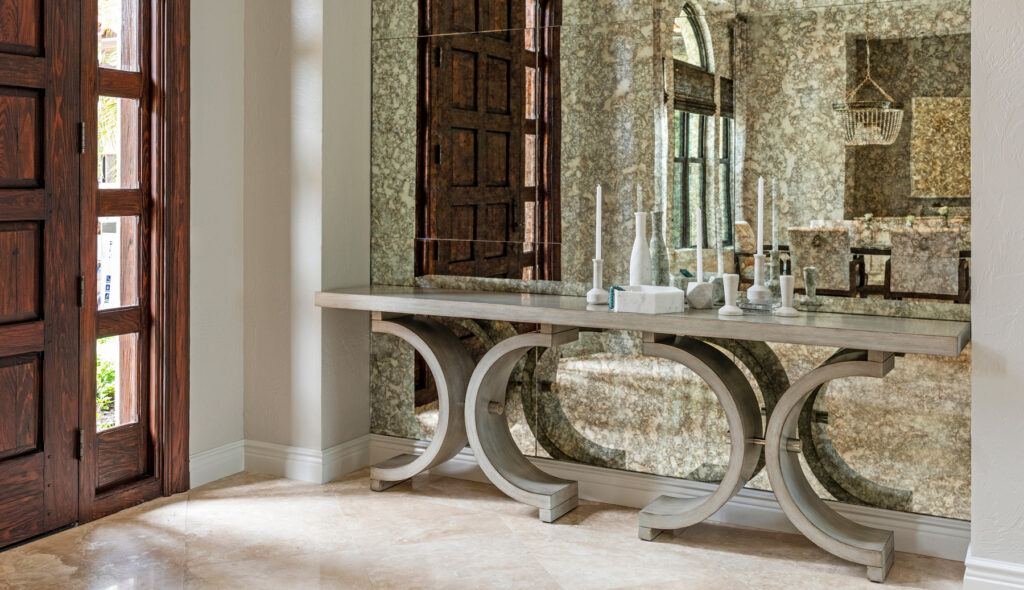
A sculptural mirror with a frame made of hammered blue-grey discs hung above a curved plaster console: that’s enough. The whole wall is resolved. A dark round pedestal table placed in front of floor-to-ceiling marble cladding with a simple arrangement of greens and objects: that’s enough too. A floor-to-ceiling moss installation in a wood frame beside a glass-rod chandelier: that’s a room. None of these spaces are trying to do multiple things. They’ve made one strong decision and let everything else be quiet.
The entry table, the console, the bench: pick the one that makes the most sense for how the space is used, and make it count. Put back only what’s intentional.
The door itself is part of the design
Something that gets overlooked: the front door is part of the entry. It’s the actual first impression, before anyone has stepped inside.
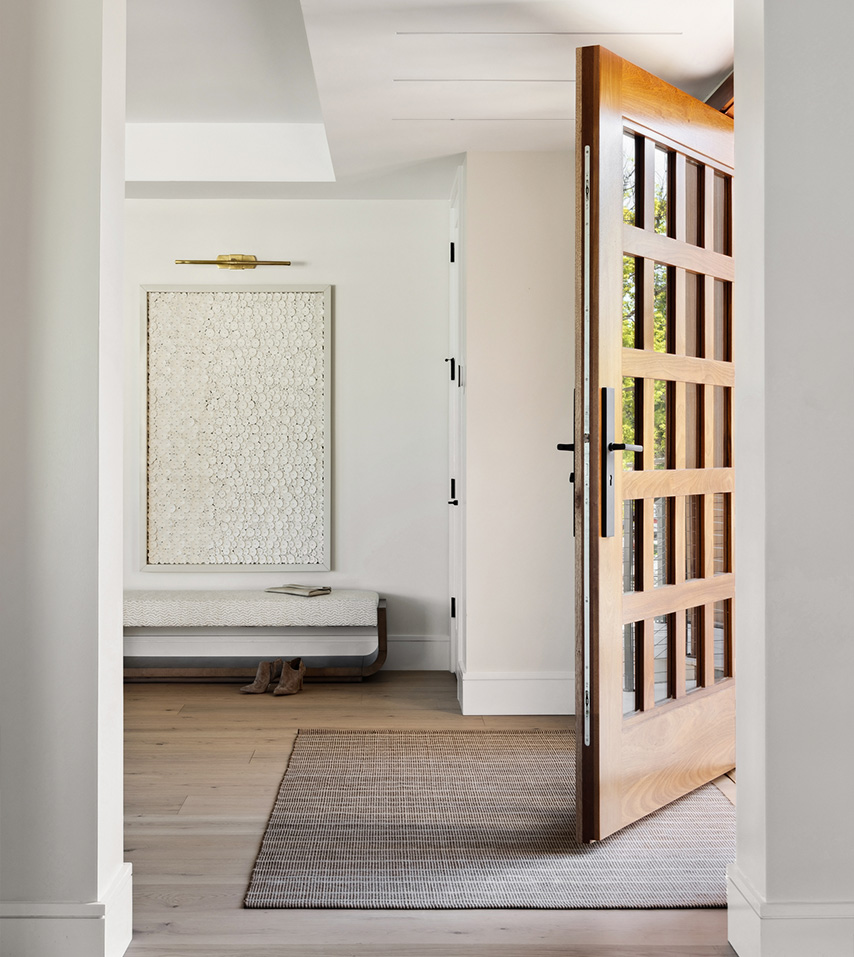
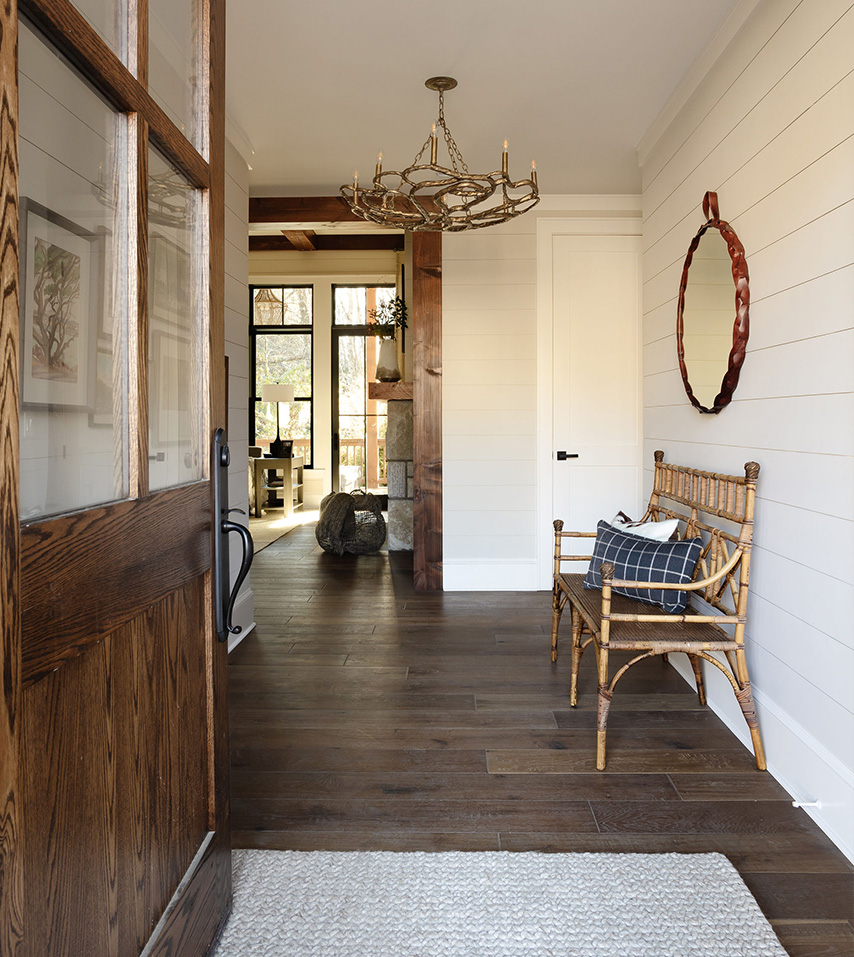
A warm natural wood grid door with black hardware announces something specific. So does a painted door in an unexpected color, or a set of French doors that flood the entry with light and frame the garden beyond. The door doesn’t have to be extraordinary, but it should be considered. When the door and the interior feel like they belong to the same intention, the entry reads as a whole.
The mistake most people make
The most common mistake is treating the entry as leftover space. The floor plan gets resolved, the main rooms get designed, and then someone looks at the entry and thinks: I’ll figure that out later.
The fix isn’t always expensive. Sometimes it’s a mirror that makes the space feel twice as large. Sometimes it’s replacing a builder-grade overhead fixture with something that actually has a presence. Sometimes it’s removing everything from the entry table and putting back only two things, chosen deliberately.
What to look at in your own entry
Open your front door and stand outside. What do you see in the first three seconds? Is there a light source that creates warmth, or just a ceiling fixture doing its minimum? Is there something to look at, or just empty wall? Is there a place for people to land when they walk in?
Most entries need less, not more. Clear the surface. Replace the fixture. Put one thing on the wall that you actually chose. The entry doesn’t have to announce itself loudly. It just has to be ready when the door opens.
It’s the first chapter of your home’s story. It’s worth getting it right.