Art Deco Revival pairs polished glamour with bold geometry — a combination that feels right at home on Sarasota’s shores. In this piece we unpack the style’s defining features and show why it works so well for waterfront residences. You’ll learn how geometric patterns, reflective finishes, and luxurious materials come together to enhance views, light, and daily life — plus how Trade Mark Interiors, Inc., a Sarasota-based design studio, translates these ideas into livable, high-value homes.
For context, here’s a concise description of the style’s core characteristics.
Art Deco Defined: Geometry, Lines and Materials
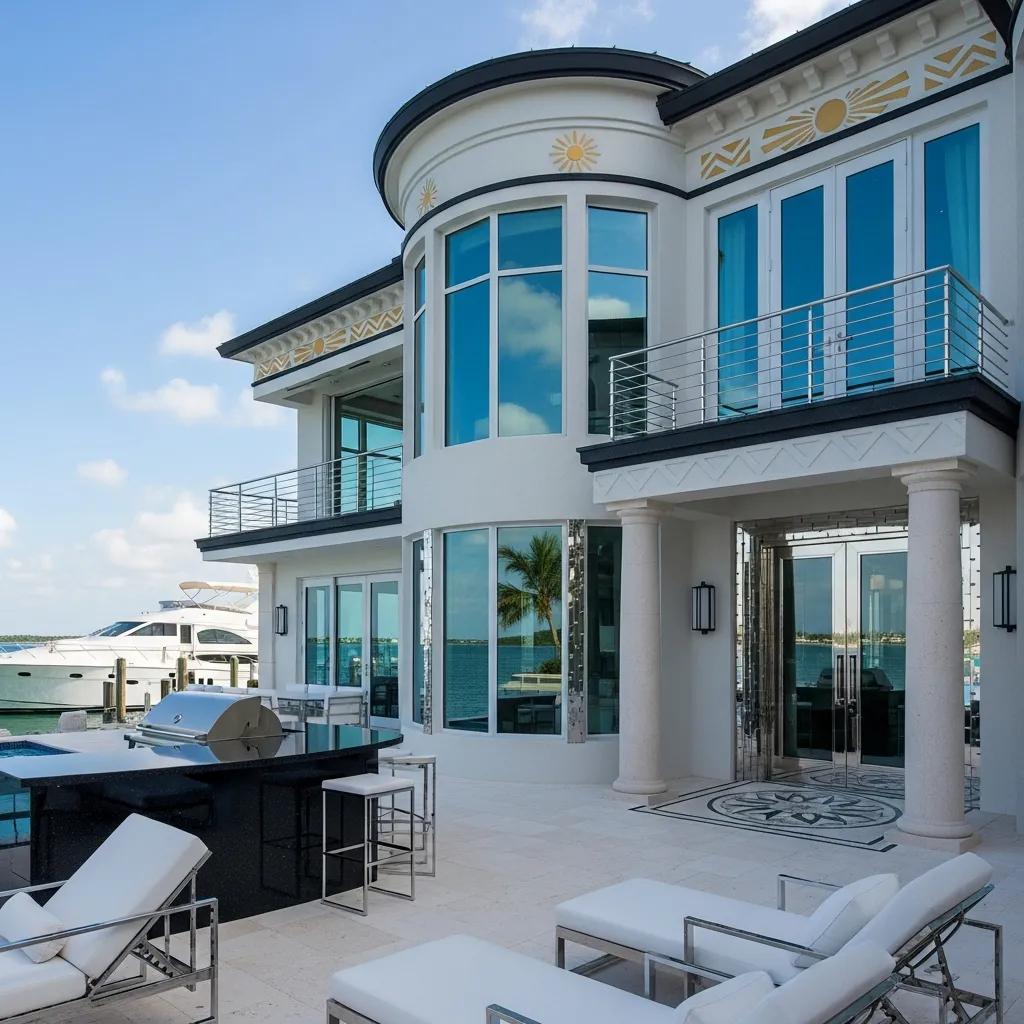
Art Deco emerged in Europe and spread across the United States in the early 20th century. It’s recognized by sharp angles, clean lines and bold geometric motifs—chevrons, sunbursts and stepped forms—often combined with streamlined curves. Color tends to be vivid and deliberate, and common building materials include stucco, concrete, stone, terracotta, steel, aluminum and glass.
Art Deco architectures as inspiration source in fashion design, RM Kotb, 2014
Why Art Deco Revival Suits Sarasota Waterfront Homes
Art Deco Revival brings a sense of curated glamour that complements coastal living. Its geometric language and rich palettes play off the natural drama of water and sky, while mirrored and polished surfaces amplify daylight and views. The result is an interior that feels luminous, intentional and in dialogue with the landscape outside.
How Geometric Patterns Enhance Waterfront Living
Patterns are central to Art Deco’s energy. Flooring, wall treatments and furniture often feature chevrons, zigzags and stepped motifs that introduce rhythm and visual motion—qualities that echo the water’s movement. Used thoughtfully, these patterns create focal points and guide sightlines, reinforcing a refined yet dynamic sense of place.
The Role of Reflective Surfaces in Coastal Art Deco Interiors
Reflective finishes—glass, polished metal, lacquer and mirrors—are both practical and aesthetic in Art Deco interiors. Along the waterfront, these surfaces catch and scatter natural light, amplifying coastal shimmer and making rooms feel larger and airier. When balanced with textured and durable materials, reflective elements elevate the mood without sacrificing comfort.
Key Art Deco Revival Elements for Coastal Luxury Interiors
Art Deco Revival is defined by a few repeatable choices: sumptuous materials, decisive color, and strong geometry. Together they form a cohesive language that reads as both luxurious and modern when applied with restraint and care.
Opulent Materials That Work on Sarasota Waterfronts
Luxurious materials—marble, exotic hardwoods and rich textiles—are staples of Art Deco. On the coast, material selection focuses on beauty and longevity: choose finishes and treatments that resist humidity and maintenance challenges while keeping the visual richness that defines the style. Marble floors, statement millwork and well-chosen upholstery deliver that timeless, tactile quality.
How Jewel Tones Complement the Coastal Palette
Jewel tones—emerald, sapphire and ruby—create striking accents against the soft blues and sands of the shoreline. Used as focal color in upholstery, cabinetry or statement walls, these hues add depth and sophistication. Metallic accents—brass or polished chrome—further tie the palette together and reference Art Deco’s historic glamour.
Bringing Art Deco Revival into Sarasota’s Waterfront Lifestyle
Integrating Art Deco into waterfront living means designing for flow, light and the indoor/outdoor connection. When done well, the style feels effortless: elegant without overwrought, dramatic without feeling theatrical.
Indoor–Outdoor Strategies for Art Deco Waterfront Homes
Maximize views and breezes with large windows, sliding glass doors and open plans that blur inside and out. Carry Art Deco cues—geometric furniture, sculptural lighting and tailored textiles—into covered terraces and patios so the design reads as a cohesive whole. Thoughtful transitions and durable outdoor-friendly materials keep the aesthetic intact from living room to lanai.
How Art Deco Relates to Sarasota’s Architectural Story
While Mediterranean Revival and Mid-Century Modern are prominent in Sarasota, Art Deco and Moderne examples exist and fit comfortably alongside them. Art Deco’s bold silhouettes and luxe finishes offer a vintage sophistication that layers well with the region’s architectural diversity—adding character and contemporary relevance to waterfront homes.
How Trade Mark Interiors Translates Art Deco for Waterfront Projects
Trade Mark Interiors, Inc. is a full-service Sarasota design firm with more than 25 years’ experience creating homes that reflect how people live. Our firm adapts Art Deco’s language—geometry, materiality and light—to each client’s lifestyle, producing interiors that feel personal, functional and enduring.
What “Psychology‑Meets‑Design” Means for Luxury Art Deco Interiors
Our psychology‑meets‑design approach begins with people: how you move, what calms you, and how spaces support everyday life. We then layer Art Deco principles—scale, texture and detail—to create interiors that are both beautiful and emotionally resonant. The result is a home that looks intentional and feels right.
Portfolio Examples of Art Deco‑Inspired Coastal Luxury
Our portfolio demonstrates how Art Deco elements can be reinterpreted for contemporary coastal living—classic motifs combined with modern function. Clients often note the transformative effect: spaces that read as timeless, custom and utterly livable. Reviewing these projects gives a clear picture of our design approach and capabilities.
The Investment Value of Art Deco Revival for Waterfront Homes
Choosing Art Deco Revival can increase both enjoyment and market appeal. Distinctive design—thoughtfully executed with durable materials—enhances resale interest and creates memorable interiors that stand out in the luxury market.
How Art Deco Influences Property Value and Daily Life
Art Deco’s strong visual identity and use of high‑quality finishes create lasting impressions that buyers notice. Beyond resale, the style enhances daily life through considered proportions, lighting and tactile materials—delivering comfort and a sense of occasion in a waterfront setting.
Why Art Deco Revival Trends into 2026
Art Deco Revival continues to gain traction because it combines vintage sophistication with contemporary needs. Its emphasis on craftsmanship, bold detail and timeless materials aligns with a broader desire for spaces that feel curated, authentic and resilient—qualities prized in today’s luxury real estate market, especially along the coast.
These Art Deco elements each contribute to the style’s visual depth and practical use in coastal luxury interiors.
| Design Element | Description | Application |
|---|---|---|
| Opulent Materials | Fine surfaces such as marble and exotic woods | Used for floors, countertops, millwork and furniture |
| Bold Colors | Rich jewel tones that create focal contrast | Applied in upholstery, accent walls and decorative details |
| Geometric Patterns | Signature shapes that add rhythm and depth | Featured in flooring, wall treatments and furniture forms |
This table shows practical ways to use Art Deco elements to elevate waterfront interiors while maintaining function and longevity.
Art Deco Revival offers a refined balance of elegance and practicality that suits Sarasota’s waterfront homes. With a clear understanding of materials, scale and light—paired with experienced design partners like Trade Mark Interiors—homeowners can create spaces that are both personally meaningful and market forward.
Frequently Asked Questions
What are the benefits of using Art Deco Revival in waterfront home design?
Art Deco Revival delivers visual distinction and a sense of luxury that appeals to buyers and residents alike. Its focus on natural light, strong geometry and layered materials enhances views and livability, making waterfront homes feel intentionally designed and welcoming.
How can homeowners maintain Art Deco features in coastal environments?
Choose materials and finishes rated for humidity and salt exposure—marine-grade coatings, corrosion‑resistant metals and sealed natural stone. Regular maintenance of reflective surfaces and protective coatings will preserve the finish and luster over time.
What are some common misconceptions about Art Deco Revival design?
People often think Art Deco is either overly ornate or strictly period. In practice, it adapts well: with careful restraint it reads contemporary, and with strategic material choices it can be accessible across budgets without losing its signature elegance.
How does Art Deco Revival compare to other design styles for coastal homes?
Unlike minimalist approaches, Art Deco embraces pattern, color and crafted detail—resulting in a more layered, dramatic interior. Compared to Mediterranean or modern styles, it brings a distinct vintage glamour that pairs well with coastal light and landscape.
What role does lighting play in enhancing Art Deco interiors?
Lighting is essential. Layered lighting—ambient, task and accent—reveals texture, highlights geometry and brings depth to materials. Bold fixtures can act as focal points while maximizing the natural light that defines waterfront living.
Are there specific color palettes that work best with Art Deco Revival?
Jewel tones like emerald, sapphire and ruby work beautifully as accents against neutral backgrounds. Metallics (gold, brass, chrome) and soft pastels can balance richer hues, creating a sophisticated, coastal‑appropriate palette.